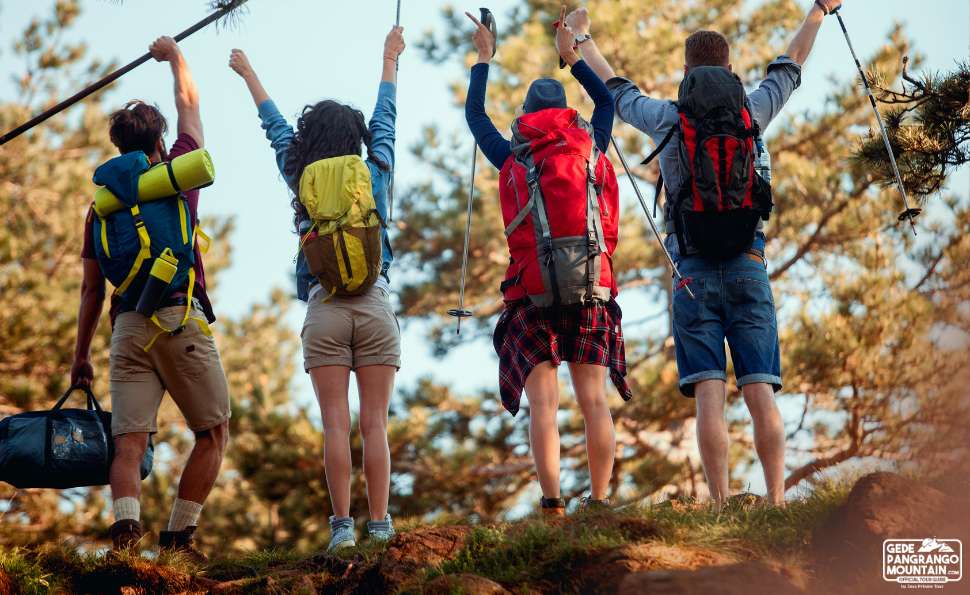
gedepangrangomountain – There is something magnetic about Mount Gede Pangrango — a quiet pull that draws hikers, nature lovers, and curious travelers into its moss-covered forests and high volcanic ridges. If you stand on any of its trails early in the morning, you will feel it immediately: the cool breath of the mountains, the soft scent of wet earth, and the rhythmic chorus of unseen birds echoing through the canopy.
A Mountain of Two Peaks and Endless Stories
Mount Gede Pangrango is not a single mountain, but a twin-volcano system — a formation so rare that it already sets the area apart from many other hiking destinations in Java.
Mount Gede — The Majestic Eastern Peak
At 2,958 meters, Mount Gede is instantly recognizable by its massive open crater, steaming fumaroles, and rugged volcanic landscape. Standing on its summit feels like stepping onto another planet — the wind sharp and cold, the scent of sulfur drifting lightly from below, and the clouds moving like slow waves beneath your feet.
Mount Pangrango — The Silent Western Giant
Slightly taller at 3,019 meters, Mount Pangrango is known for its gentler shape and its crown jewel: Mandala Wangi, a serene high-altitude valley where the forest softens and the world grows quiet. Many hikers say Pangrango feels more mystical — a place where the forest seems older, calmer, and deeply alive.
Because the two peaks sit close together, many trekkers choose to summit both in one trip. But each peak has a personality of its own, and every visit reveals something new.
A Sanctuary of Rare and Endemic Life
One of the most extraordinary facts about Mount Gede Pangrango is its status as a global biodiversity hotspot. Scientists from around the world regularly visit the park for research, and it has long been a living laboratory for ecological study.
Walk along any of the trails — Cibodas, Gunung Putri, or Selabintana — and the forest immediately envelops you with layers of life: towering pohon puspa, thick ferns, tangles of orchids clinging to mossy branches, and the faint rustle of wildlife hidden just out of sight.
Flora Treasures of the Mountain
Edelweiss Fields of Suryakencana
At around 2,750 meters, the vast meadow of Alun-Alun Suryakencana stretches out like a silver-green sea of edelweiss. These flowers — often called “the eternal bloom” — grow only in high mountain ecosystems and are strictly protected. In the early morning light, the meadow glows softly, with the cool mist weaving between each cluster of blossoms.
The Forest of Giant Puspa Trees
Throughout the lower and mid-mountain forests, the puspa tree (Schima wallichii) dominates the landscape. Its tall, straight trunk and thick canopy create the distinct cool, shaded environment hikers love so much.
Home of the Mysterious Pitcher Plants
Certain parts of the mountain, especially the wetter zones, are home to the delicate but carnivorous Nepenthes, or pitcher plants. These rare plants are endemic to specific microhabitats within the national park.
Fauna — Rare Animals Still Thriving in the Wild
The Gentle Call of the Javan Gibbon
If you begin your hike near sunrise, you may hear long, echoing songs drifting through the canopy. These are the calls of the Javan gibbon (Hylobates moloch), one of the world’s most endangered primates. Their presence is a sign of a healthy, intact forest — a gift not many mountains can offer today.
The Elusive Javan Leopard
Deep inside the park lives the Javan leopard (Panthera pardus melas). Though sightings are extremely rare, their footprints, scratch marks, and occasional camera trap images remind researchers that this top predator still roams freely within the park.
Birds of the Mountain Sky
From the swift silhouette of the Javan eagle circling the thermals to the cheerful chatter of the poksay kuda, birdwatchers consider Mount Gede Pangrango a paradise. More than 200 bird species have been recorded here.
Natural Wonders Carved by Time and Fire
What makes Mount Gede Pangrango unforgettable is how dramatically its landscapes change as you climb.
Telaga Biru — The Blue Lake Hidden in the Forest
Just minutes from the Cibodas entrance, a deep forest suddenly reveals a small lake shimmering with shades of turquoise and emerald. Telaga Biru gets its color from algae that change hues depending on the light and season. It’s a gentle reminder that the mountain has its own rhythms, separate from ours.
Cibeureum Waterfalls — Three Voices of One River
Farther up the trail, you reach Cibeureum Waterfall, actually a trio of falls fed by different streams. The air grows cooler here, filled with mist and the fragrance of wet moss clinging to the rocks. Many hikers take a moment to rest here, listening to the sound of cascading water mixing with the forest winds.
The Crater of Mount Gede
Near the summit, the vegetation thins, and the land turns rocky as sulfur scents rise from active fumaroles. The crater is a dramatic reminder that this mountain is still alive beneath the surface — constantly shaping and reshaping itself over centuries.
Sunrise at the Peaks
Whether from the summit of Gede or Pangrango, sunrise here is unforgettable. The horizon begins as a thin line of gold, slowly illuminating the patchwork of West Java’s mountains. On clear days, you can see the contours of Mount Salak, Mount Pangrango, and distant volcanoes stretching into the horizon.
Climbing Mount Gede Pangrango — What to Expect
Trekking Mount Gede Pangrango is an experience filled with shifting ecosystems, changing weather, and steady climbs. Most hikes take 2–3 days, depending on route and pace.
The Popular Mountain Routes
Cibodas Route
The most well-known path and the one with the clearest trail markings. Hikers pass key landmarks such as:
- Telaga Biru
- Hot springs
- Cibeureum Waterfalls
- The rocky path to the crater
It typically takes 7–9 hours to reach the summit.
Gunung Putri Route
A favorite for those who want a slightly faster but steeper path. The route passes through peaceful pine forests before rising toward Suryakencana. It takes 8–10 hours depending on conditions.
Selabintana Route
The longest and quietest route. Less crowded, more pristine, and more challenging. Perfect for experienced trekkers who want solitude in the forest. It usually takes 6–8 hours to reach key resting points, with longer total trekking time than other routes.
The Mountain Teaches Respect
Mount Gede Pangrango is beautiful, but like all wild places, it demands respect.
The weather can change suddenly — warm sunlight fading into cold mist within minutes. The trails can become slippery after rain. And the ecosystem is fragile: edelweiss must not be picked, wildlife should never be disturbed, and all trash must be carried home.
To step into this mountain is to enter a protected sanctuary. And those who walk its trails become part of its ongoing story of conservation and care.
Final Thoughts — The Timeless Magic of Mount Gede Pangrango
Mount Gede Pangrango is more than a hiking destination. It is a mosaic of ecosystems, each with its own rhythm and mood — from dense montane forests to volcanic craters, from blooming meadows to misty waterfalls.
It is a place where adventure and serenity meet. Where science and mythology coexist. Where every trail feels like a whispered invitation to explore a deeper side of nature.
Whether you’re visiting for the first time or returning after years, the mountain always has a new secret to share — a new birdsong, a drifting cloud, or a quiet sunrise that stays with you long after you’ve descended.
So, if you’re ready to explore the wonders of Mount Gede, head over to our ONLINE BOOKING PAGE and let’s start planning your adventure. Or simply CLICK THIS LINK to chat with us on WhatsApp.
With our team, you’re not just getting a guide; you’re gaining a local friend who will ensure your trip is nothing short of extraordinary.