
gedepangrangomountain.com – Mount Gede is often spoken of with warmth and admiration. For many hikers, it is the mountain where they first fell in love with trekking in Java — walking beneath towering rasamala trees, hearing the echo of bird calls drifting through the mist, and finally stepping onto the wide savanna of Surya Kencana covered in edelweiss.
But behind that beauty lies another side of Mount Gede — a side that demands humility, preparation, and respect.
At 2,958 meters above sea level, Mount Gede is not the tallest peak in Java, yet it has earned a reputation for trails that quietly test both physical endurance and mental focus. Some sections are steep enough to make your calves burn within minutes. Others are deceptively slippery, where moss-covered rocks and exposed roots wait patiently for a careless step.
Local guides and experienced hikers all agree on one thing: Mount Gede is friendly only if you respect it.
In this guide, we will walk together through three of the most challenging trek sections on Mount Gede — places where many hikers slow down, steady their breath, and remind themselves why preparation matters.
Understanding the Nature of Mount Gede’s Trails
Mount Gede sits within Mount Gede Pangrango National Park, an ecosystem shaped by volcanic activity, high rainfall, and dense tropical forest. The soil is fertile but fragile. Roots snake across the path like natural ladders, and stones are often polished smooth by centuries of mist and rain.
Add frequent fog, sudden weather changes, and long continuous ascents, and you get trails that reward patience more than speed.
Tanjakan Setan on the Cibodas Trail
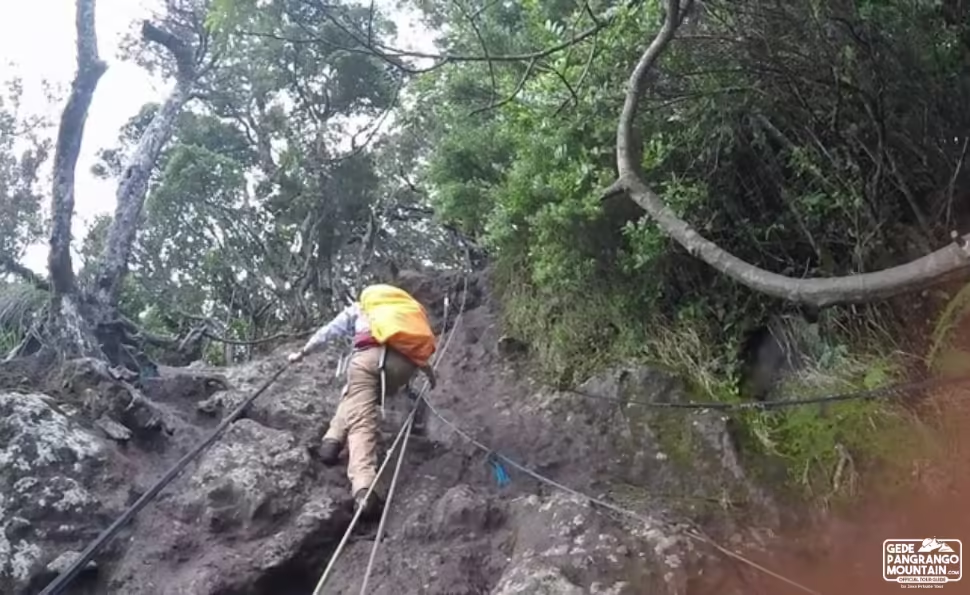
Where the Forest Suddenly Stands Upright
Located on the Cibodas trail, Tanjakan Setan appears near the final approach to the summit of Mount Gede. After hours of relatively gentle walking, hikers are suddenly faced with a steep wall of roots, rocks, and compact soil.
The slope can exceed 60 degrees in some sections. The air feels cooler, often damp, and fog frequently reduces visibility. Fixed webbing ropes are commonly used to assist hikers through this ascent.
Why Tanjakan Setan Is Tricky
- Wet roots and volcanic rocks become extremely slippery
- The ascent is long and continuous, draining energy quickly
- Balance and focus are essential, especially in wet conditions
Safe Tips for Passing Tanjakan Setan
- Reduce unnecessary pack weight
- Maintain steady breathing and slow pacing
- Wear shoes with strong grip and use gloves for better hold
- Apply three-point contact technique on steep sections
Simpang Gumuruh on the Selabintana Trail
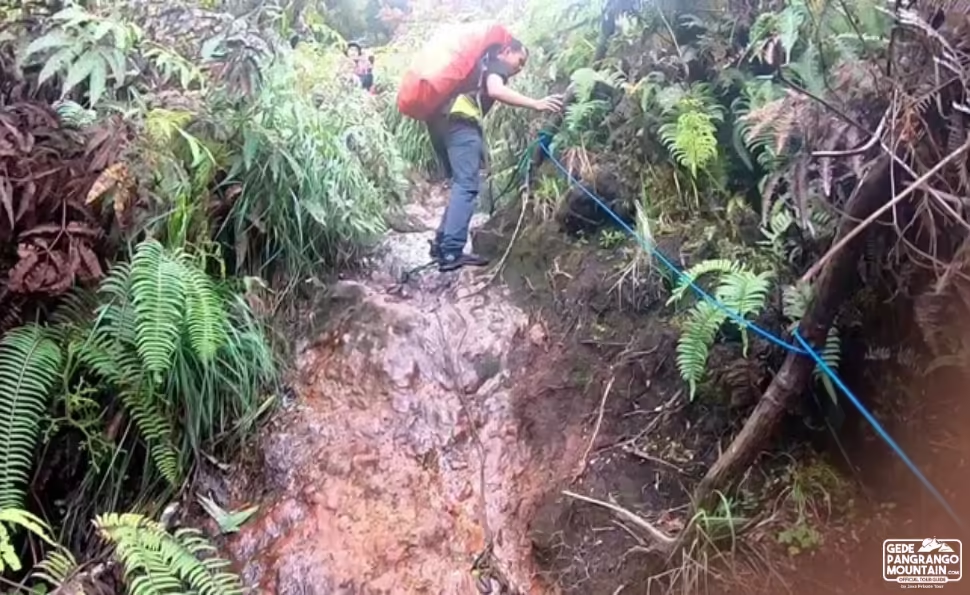
A Silent, Slippery Forest Challenge
The Selabintana trail is quieter and wilder than other routes. The Simpang Gumuruh section lies between its shelter area and the approach to Alun-Alun Surya Kencana.
Although not as steep as Tanjakan Setan, this section is often considered more dangerous due to its consistently wet surface.
Why Simpang Gumuruh Requires Extra Caution
- Moss-covered rocks remain slippery year-round
- Water seeps across the trail, hiding hazards
- Narrow path limits maneuvering space
- High presence of pacet (leeches) after rain
How to Move Safely Through Simpang Gumuruh
- Use footwear with aggressive traction
- Take short, controlled steps
- Carry salt or repellent for leeches
- Stay calm and focused throughout the section
Simpang Maleber on the Gunung Putri Trail
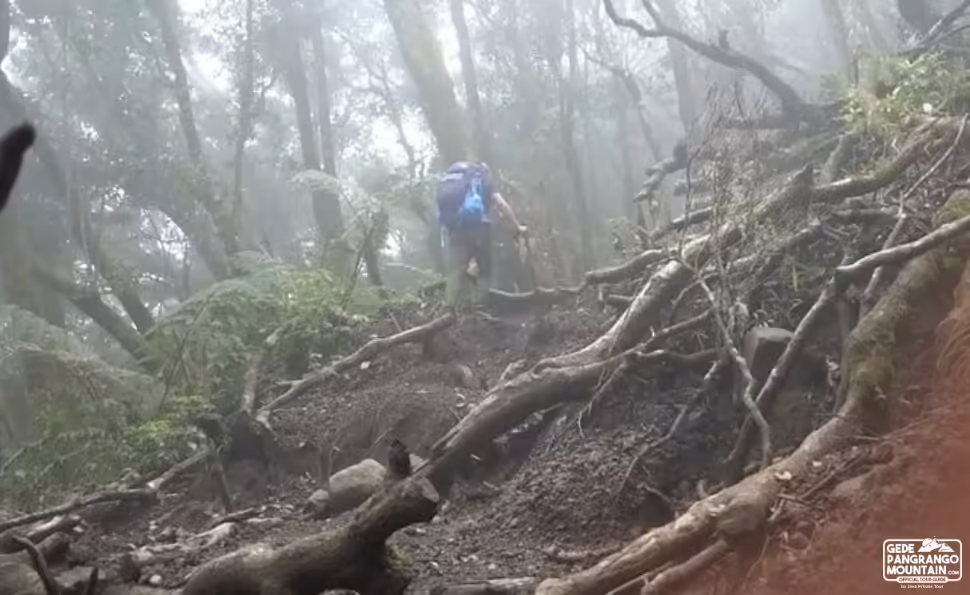
The Long Climb That Drains Your Stamina
On the Gunung Putri route, the stretch from Pos 3 Buntut Lutung to Pos 4 Simpang Maleber is a steady uphill hike lasting 1.5 to 2 hours.
While not extremely steep, the uninterrupted ascent slowly drains energy, especially for hikers who underestimate its length.
Terrain Characteristics
- Red soil that becomes slippery when wet
- Dense roots and loose gravel
- Occasional fallen trees requiring careful movement
- Limited resting points along the way
Tips for Managing Simpang Maleber Safely
- Keep a consistent walking rhythm
- Hydrate regularly and eat light snacks
- Use trekking poles to protect knees
- Take short breaks without cooling down too much
Comparing the Three Main Routes
- Cibodas: Scenic and beginner-friendly overall, with a demanding final ascent
- Gunung Putri: Faster route with long stamina-testing climbs
- Selabintana: Quiet, immersive, but slippery and remote
Bonus Safety Tips for Difficult Trek Sections
Physical and Mental Preparation
Prepare your legs with light training before the hike. Mental readiness is just as important — calm focus reduces risk.
Essential Gear Checklist
- Hiking boots with strong grip
- Trekking poles
- Rain protection
- Gloves
- Headlamp
Best Time to Hike Mount Gede
The dry season from May to September offers safer conditions. During the rainy season, these challenging sections become significantly more dangerous.
Closing Reflection
Tanjakan Setan, Simpang Gumuruh, and Simpang Maleber are not obstacles meant to intimidate hikers. They are reminders that Mount Gede rewards patience, preparation, and respect.
When approached correctly, these sections become meaningful highlights of the journey, adding depth and character to every ascent.
So, if you’re ready to explore the wonders of Mount Gede, head over to our ONLINE BOOKING PAGE
and let’s start planning your adventure. Or simply CLICK THIS LINK to chat with us on WhatsApp.
With our team, you’re not just getting a guide; you’re gaining a local friend who will ensure your trip is nothing short of extraordinary.





