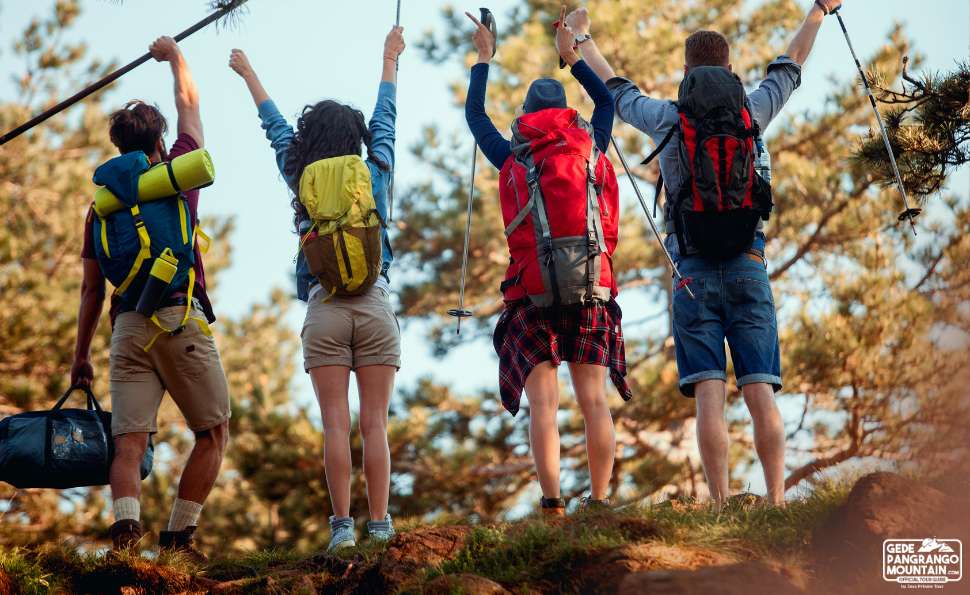
gedepangrangomountain – As you hike closer to the upper slopes of Mount Gede, the forest air slowly changes. The temperature feels warmer, the scent of sulfur becomes faintly noticeable, and suddenly, white steam curls upward from the earth. Many hikers pause here, wondering: if Mount Gede hasn’t erupted in decades, why does steam still rise near its crater? The answer lies beneath your feet. Mount Gede is not a sleeping giant — it is very much alive.
Mount Gede A Living Volcano
Mount Gede is classified as an active stratovolcano within Mount Gede Pangrango National Park. Although its last recorded eruption occurred in 1957, the mountain continues to display clear signs of volcanic vitality. One of the most visible signs is the persistent steam rising near areas such as Kawah Wadon.
This phenomenon is not random. It is part of an ongoing geothermal process that has shaped Mount Gede for thousands of years.
What Causes Steam Near Mount Gede Crater
Geothermal Heat Beneath the Mountain
Deep below Mount Gede, magma remains present within the volcanic system. This magma does not need to erupt to affect the surface. Its intense heat warms surrounding rocks and underground water, creating a powerful geothermal engine beneath the mountain.
Rainwater Seeping Underground
Mount Gede receives heavy rainfall year-round. Rainwater slowly seeps through porous volcanic rock, traveling deep into the earth where temperatures rise dramatically. As the water heats up, it transforms into superheated steam.
Steam Vents and Fumaroles
The steam then seeks an escape. It rises through cracks and fractures in the volcanic rock, emerging at the surface through fumaroles — natural steam vents. Kawah Wadon is one of the most well-known locations where this process can be observed clearly, especially on cool mornings.
Why Rising Steam Is Scientifically Important
A Clear Indicator of Volcanic Activity
The presence of continuous steam emissions confirms that Mount Gede is not dormant. Even without frequent eruptions, the mountain’s internal system remains active. This is why Mount Gede is closely monitored by volcanologists.
Continuous Monitoring for Safety
Indonesian volcanic authorities regularly measure seismic activity, gas emissions, and temperature changes around Mount Gede’s crater zones. Sudden increases in steam volume, sulfur smell, or earthquake swarms may signal heightened unrest.
When such signs appear, certain areas — particularly near Kawah Wadon — may be temporarily closed to hikers to ensure safety.
What This Means for Hikers and Nature Lovers
Seeing steam rise near Mount Gede’s crater is both awe-inspiring and humbling. It reminds visitors that they are walking on a living landscape shaped by powerful natural forces. This is also why trekking rules in Mount Gede Pangrango National Park must always be respected. Understanding the mountain’s behavior allows hikers to appreciate not only its beauty, but also its risks.
Exploring Mount Gede with Local Knowledge
Exploring an active volcanic environment requires more than just a map. It requires experience, awareness, and deep respect for nature. This is where Java Private Tour stands apart. Java Private Tour is not a generalist travel company — it is a specialist, focusing on Indonesia’s volcanic landscapes, national parks, and natural heritage.
With local guides who understand Mount Gede’s terrain, weather patterns, and volcanic zones, your journey becomes safer, richer, and more meaningful.
So, if you’re ready to explore the wonders of volcanic forests on Mount Gede, head over to our REQUEST PAGE and let’s start planning your adventure. Or you can simply CLICK THIS LINK to chat with us on WhatsApp. With Java Private Tour, you’re not just getting a guide; you’re gaining a friend who will ensure your trip is nothing short of extraordinary. See you in Java!