Mount Gede Pangrango Trail Closed After Suryakencana Wildfire
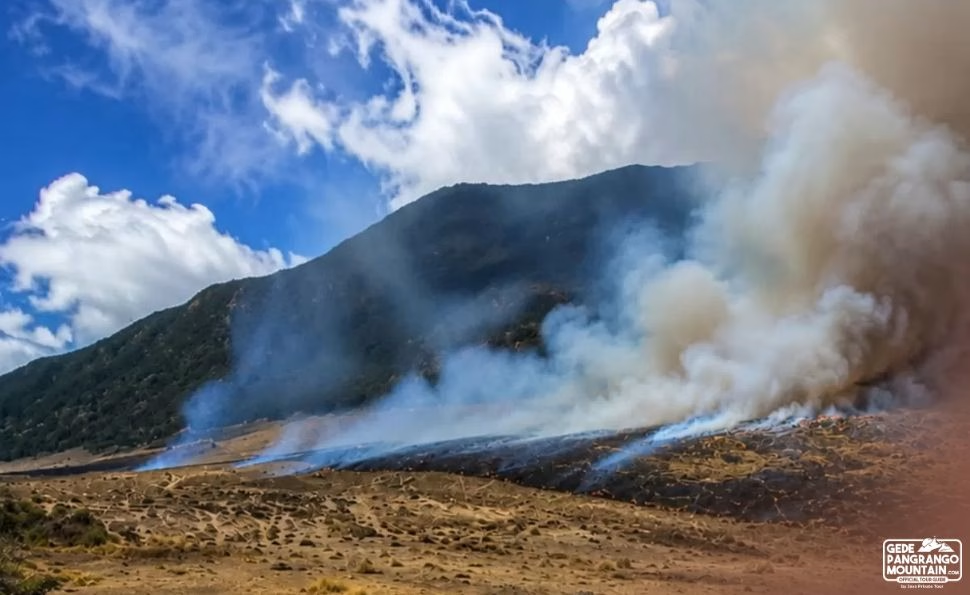
gedepangrangomountain.com – If you have been dreaming about the cool mist rolling over the savanna at Suryakencana, we need to share some important news first. A fire swept through the western edge of the Mount Gede Pangrango savanna on Thursday, 6 August 2026, and the national park has closed all climbing routes while rangers finish securing the area. We know this is disappointing if you had a trip planned, so let’s walk through exactly what happened, what it means for your climb, and when you can expect the mountain to open its arms again.
What Happened at Suryakencana
Around 3:00 PM on Thursday afternoon, smoke began rising from the western section of Alun-Alun Suryakencana, the wide grassy plateau that every Gede climber knows as the resting ground before the final push to the summit. The fire broke out near Gunung Gumuruh, roughly five meters from the treasured edelweiss savanna, the same silvery flowers that make this stretch of trail feel almost otherworldly at dawn.
According to Balai Besar Taman Nasional Gunung Gede Pangrango (the park’s management authority), the fire is suspected to have started from a hiker’s portable gas stove that leaked and ignited, catching the dry grass around it. The official cause is still under investigation by BPBD Jawa Barat, so nothing has been confirmed yet, but the dry-season conditions and parched ilalang grass made the savanna especially vulnerable that afternoon.
How the Fire Was Brought Under Control
What happened next is the part of this story we want you to remember, because it says everything about the people who love this mountain. Hikers, porters, basecamp staff, and volunteers already on the trail did not wait for backup. They grabbed whatever they had on hand and worked together to beat back the flames along the grassland. Within about three hours, the fire was reported under control, before it could climb into the surrounding forest.
Park rangers and joint teams coordinated with the West Java Regional Disaster Management Agency (BPBD Jawa Barat) to assess the damage and secure the site. Based on ground surveys, the burned area covers approximately one hectare of dry grassland and light woody vegetation, close to but not reaching the edelweiss field it threatened. Even after the flames were out, officers stayed on rotating watch for three days to catch any smoldering embers before they could flare up again, especially with strong winds still moving across the ridge.
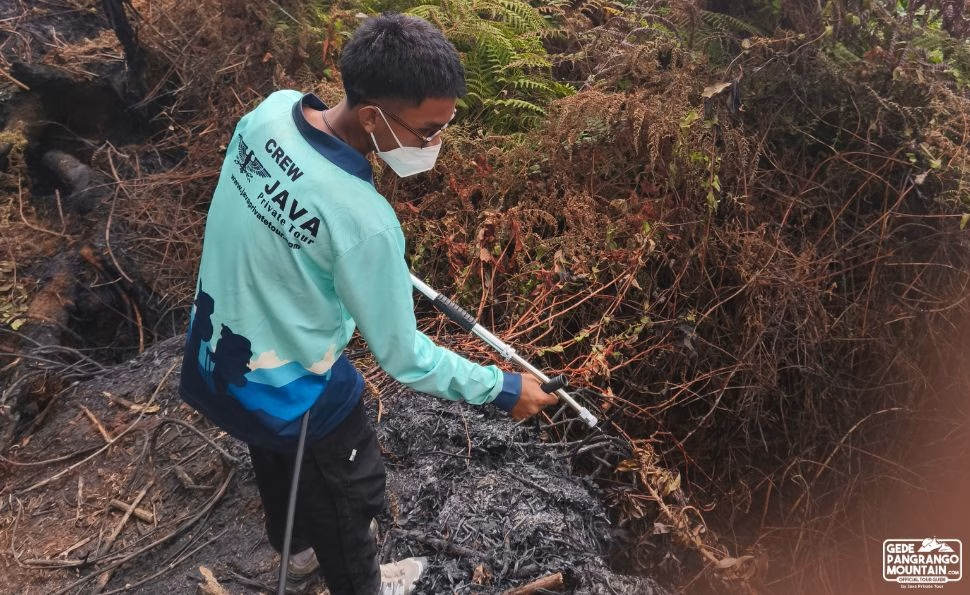
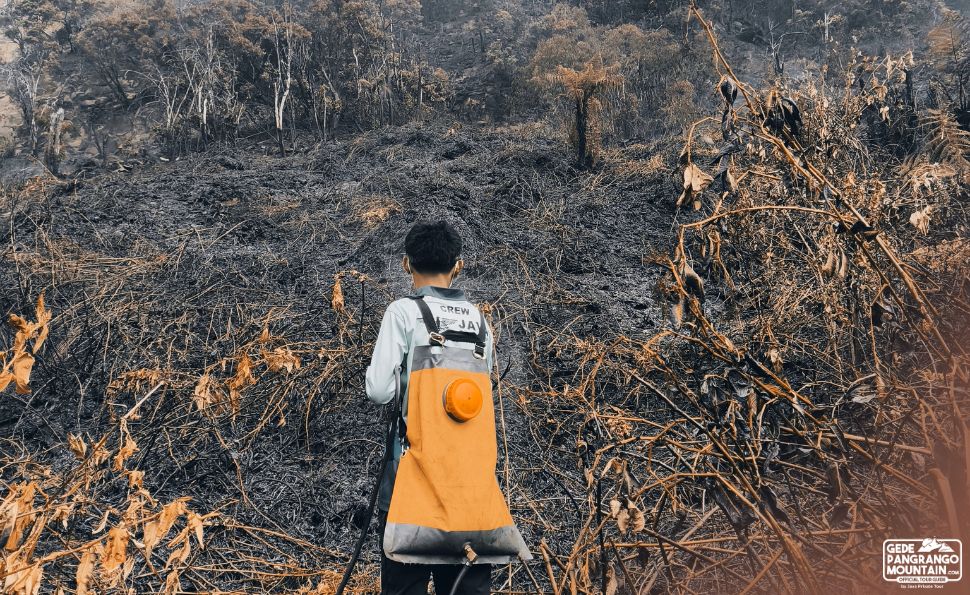
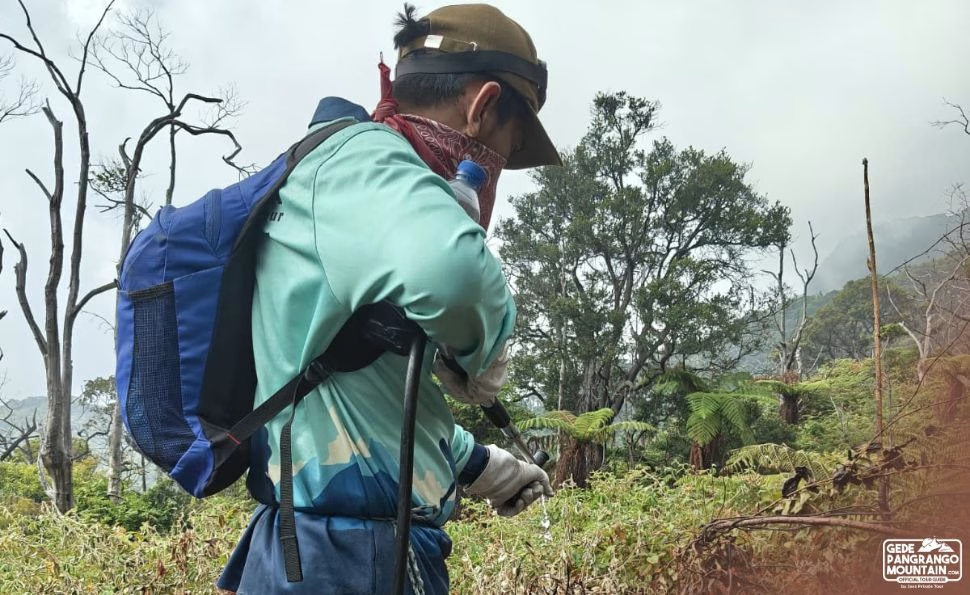
Our own crew from Java Private Tour was part of that follow-up effort. Once word of the fire reached our team, several of our mountain guides carried backpack sprayers and jerry cans of water up to the burned sections to help douse smoldering ground and check for hidden embers among the blackened fern trunks and undergrowth, the kind of quiet, unglamorous work that keeps a contained fire from becoming a reignited one. It is not a role we advertise often, but it reflects something we genuinely believe: if you make your living guiding people through a place like this, you owe it something back when it is hurting.
Why Suryakencana Matters So Much to This Mountain
For anyone who has not stood there yet, Suryakencana is hard to describe without sounding like you are exaggerating. After hours of climbing through dense montane forest, the trees suddenly part and the trail opens onto nearly fifty hectares of rolling grassland, ringed by mist and framed by the twin peaks of Gede and Pangrango. It is one of the largest high-altitude savannas in Java, sitting at roughly 2,750 meters above sea level, and for most climbers it is the emotional high point of the trek before the summit push even begins.
The air up there carries a particular smell, cool and slightly sweet, carried on wind that never really stops moving across the open plateau. Climbers pitch their tents in loose clusters near the tree line, cook simple meals as the temperature drops fast after sunset, and wake to fields silvered with frost and edelweiss blooms catching the first light. It is a place people return to again and again, not for the summit, but for the savanna itself.
That is exactly why this fire, even at a relatively contained one hectare, rattled so many people who know the mountain well. Suryakencana is not just a stopover on the way up. It is one of the reasons climbers choose Gede Pangrango over other Javanese peaks in the first place, and a habitat that has taken decades to reach its current state. Losing even a fraction of it to something as preventable as an unattended stove is a reminder of how thin the margin for carelessness really is at this altitude.
Why the Entire Mountain Is Closed, Not Just Suryakencana
You might be wondering why a fire in one section of the savanna means every climbing gate into Mount Gede Pangrango is shut, not just the trail near the burn site. The park authority issued Surat Edaran (Circular Letter) Number SE.18 Year 2026, closing all hiking activity across the entire TNGGP area from 7 August through 11 August 2026.
The reasoning is simple and, honestly, the right call. Rangers need clear trails to move equipment and personnel to the burn site without dodging climbing traffic. Fire risk during dry season does not respect trail boundaries, so keeping every gate closed reduces the chance of a second incident starting somewhere else while attention is focused on Suryakencana. And most importantly, it keeps climbers, porters, traders, and volunteers away from an area where the ground is still being monitored for hidden embers.
What This Means If You Had a Trip Planned
If your registration falls within the closure window, the park’s official refund and rescheduling process applies, not informal workarounds. We would strongly discourage attempting to enter through unofficial trails during this period. Beyond it simply being against park regulations, you would be walking into an active recovery zone where footing and air quality near the burn site may still be unpredictable.
The Bigger Lesson Hiding in This Fire
There is a quiet, practical wisdom that came out of this incident, something a park official put plainly in the aftermath: the most important thing we can do is prevent what is preventable. That means protecting the trees that are already protecting us, the roots that hold water in the soil during dry months. When you want to put out a fire but there is no water left in the ground because the forest cover has been stripped away, all the willing hands in the world will not be enough.
Suryakencana’s grasses turn golden and brittle by August. A single dropped ember, a leaking stove, a poorly extinguished cooking fire, any of these can be the spark. None of it is dramatic until it is, and then it spreads across a savanna in minutes. This is exactly why the park enforces rules around cooking equipment, campfires, and designated shelter zones, not to make your trek less comfortable, but because dry grass and wind do not forgive carelessness.
How Climbers Can Help Prevent the Next One
Every person who steps onto this mountain becomes part of its safety net, whether they realize it or not. A few habits make a real difference during dry season:
- Use a stable, well-maintained stove and never leave it unattended, even for a moment.
- Cook only in designated areas, away from dry grass and low brush.
- Carry out everything you carry in, including anything that could smolder.
- Report smoke or unusual heat immediately to rangers or fellow climbers nearby, rather than assuming someone else has already noticed.
- Respect trail closures completely, even if the summit feels just within reach.
None of these habits are complicated. They just require the kind of attention that this mountain has always asked of the people who walk through it.
What Happens Next
As of this closure period, park rangers continue monitoring the burned section of Suryakencana for residual heat and assessing how quickly the grassland will recover. Grass savanna ecosystems like this one are, thankfully, more resilient than forest canopy. Given time and the arrival of the rainy season, the scorched ground at Suryakencana will green over again, though the edelweiss nearby was fortunate to have been spared this time. It will not always be that close a call.
The closure is scheduled to lift on 11 August 2026, though this depends entirely on how conditions look on the ground. We will be watching the official updates from Balai Besar TNGGP closely and will let you know as soon as the trails reopen.
Frequently Asked Questions
Is Mount Gede Pangrango completely closed right now?
Yes. Every entrance gate to Taman Nasional Gunung Gede Pangrango is closed to climbers under Surat Edaran SE.18 Year 2026, effective 7 through 11 August 2026, regardless of which route you normally use.
Was anyone hurt in the fire?
No injuries have been reported. The fire was contained to grassland and light vegetation before it could spread toward climbers, porters, or trading stalls in the area.
Did the fire reach the edelweiss field?
No. The flames came within about five meters of the edelweiss savanna but were stopped before reaching it.
When will the trails reopen?
The closure is currently set to lift on 11 August 2026, pending final assessment by park rangers on the ground. Reopening dates for national park closures can shift if monitoring turns up new concerns, so it is worth confirming directly before finalizing travel plans.
A Mountain Worth Protecting
Mount Gede Pangrango has weathered a lot over the decades, eruptions long past, storms, the wear of thousands of boots. What makes this particular week different is how quickly the people who love it responded, without waiting to be asked. That is the spirit this mountain has always inspired, and it is worth carrying with you the next time you lace up your boots and step onto its trails.
So, if you’re ready to explore the wonders of Mount Gede once the trails reopen, head over to our ONLINE BOOKING PAGE and let’s start planning your adventure. Or simply CLICK THIS LINK to chat with us on WhatsApp. With our team, you’re not just getting a guide, you’re gaining a local friend who will ensure your trip is nothing short of extraordinary.