
gedepangrangomountain – Long before wooden signposts, stone steps, and digital hiking permits existed, Mount Gede and Mount Pangrango stood in quiet grandeur at the heart of West Java. These twin volcanoes were not destinations in the modern sense. They were living landscapes—wild, sacred, unpredictable, and deeply respected by local communities and early scientists alike.
To imagine Mount Gede Pangrango before modern trails is to step into a time when dense montane forests swallowed all sound, when paths were shaped by animal movement and human intuition, and when every journey into the mountains required patience, humility, and deep respect for nature.
Mount Gede Pangrango Before It Was a National Park
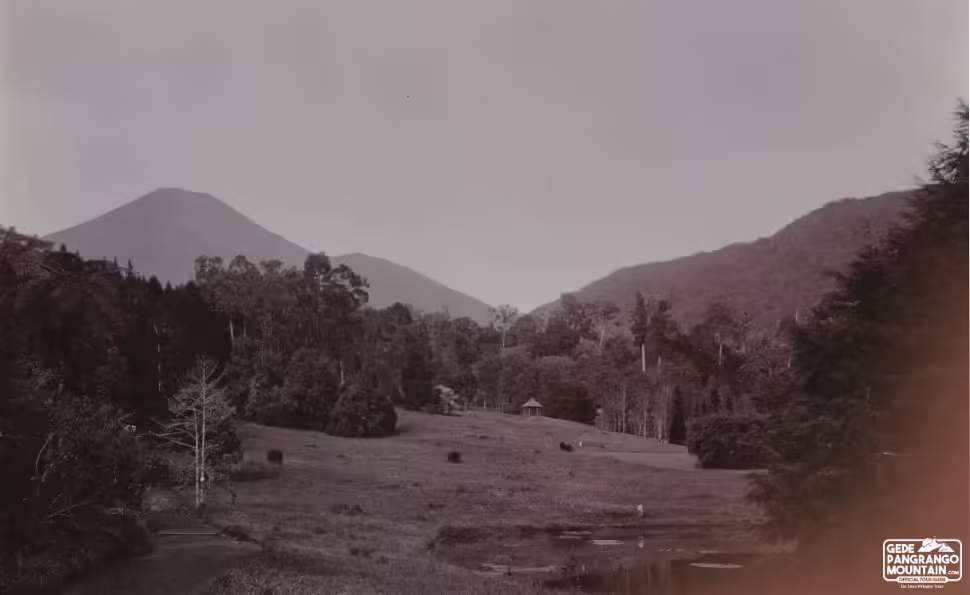
A Primeval Landscape of Forest and Fire
Before the idea of a national park ever existed, Mount Gede Pangrango was a continuous wilderness stretching across what are now Bogor, Sukabumi, and Cianjur. The slopes were cloaked in untouched tropical montane rainforest, dominated by towering rasamala trees (Altingia excelsa), puspa (Schima wallichii), and ancient tree ferns.
There were no clear hiking trails. Movement through the forest followed rivers, ridgelines, and natural clearings. Volcanic activity periodically reshaped the land, leaving behind fertile soil and lava scars slowly reclaimed by nature.
Sacred Mountains in Local Belief and Oral History
More Than Just Geography
Long before scientific expeditions arrived, local Sundanese communities viewed Mount Gede and Pangrango as sacred spaces. These mountains were believed to be guarded by unseen forces, and entering the forest was never taken lightly.
People did not hike for recreation. They entered the mountains for ritual, reflection, or survival. This cultural restraint unintentionally preserved the ecosystem for generations.
1889 The First Turning Point Cibodas Nature Reserve
When Science Met the Wild
The first major conservation milestone occurred in 1889, when the Dutch colonial government established Cibodas Nature Reserve. Initiated by botanists from Cibodas Botanical Garden such as Melchior Treub and K. W. Dammerman, the area became a living laboratory of tropical ecology.
At that time, access routes were extremely primitive. Researchers relied on local guides and natural navigation, crossing rivers without bridges and moving through dense forest without maps.
Trails Formed by Necessity, Not Comfort
Before modern routes such as Cibodas, Gunung Putri, or Selabintana were formalized, paths into the mountain consisted of:
- Narrow footpaths used by researchers and forest rangers
- Animal tracks slowly widened by repeated passage
- Temporary routes erased by rain, landslides, or forest regrowth
There were no staircases, campsites, or trail signs. Reaching the crater of Mount Gede was a serious expedition, not a casual weekend hike.
From Independence to Integration 1950s to 1970s
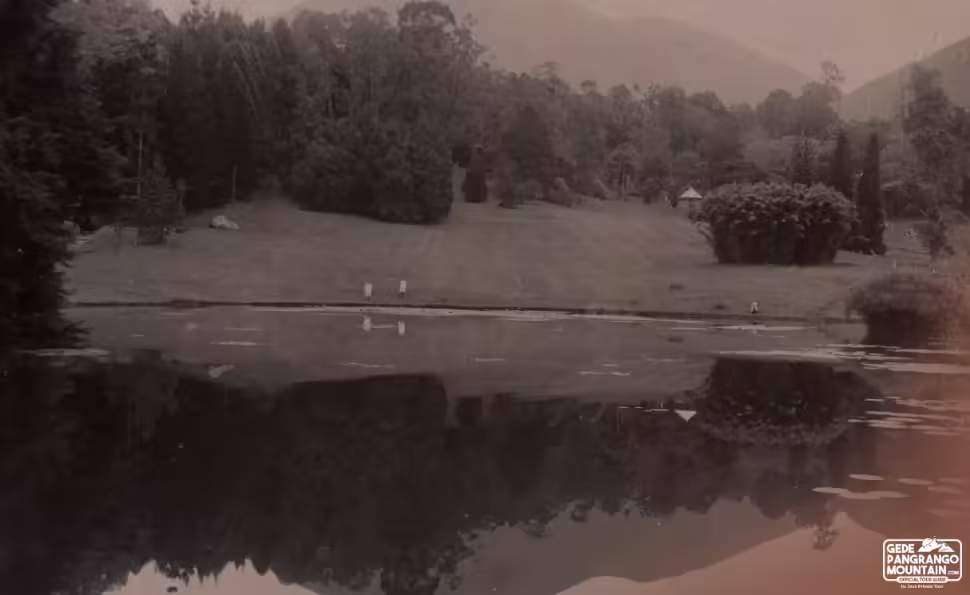
After Indonesian independence, conservation continued through the integration of three protected areas: Cibodas Nature Reserve, Mount Gede Nature Reserve, and Mount Pangrango Nature Reserve.
During this period, researchers documented iconic endemic species such as the Javan Gibbon, Surili, and the Javan Hawk-Eagle. Access remained limited, and conservation—not tourism—was the priority.
1980 The Birth of Taman Nasional Gunung Gede Pangrango
On March 6, 1980, the area was officially designated as Taman Nasional Gunung Gede Pangrango. This marked the beginning of managed access, scientific zoning, and sustainable nature tourism.
Modern trails were carefully developed to guide visitors while protecting sensitive ecosystems.
A Living Laboratory Through the Decades
Institutions such as LIPI (now BRIN), IPB University, and international universities have used the park for long-term research. Many of today’s hiking trails follow routes originally established for scientific study.
In many ways, modern hikers walk in the footsteps of early researchers.
UNESCO Recognition and Modern Conservation
In 2021, UNESCO expanded the biosphere designation to include Gede Pangrango Halimun Salak Biosphere Reserve, reinforcing the global ecological importance of the region.
Modern conservation tools such as visitor quotas, digital permits, and community education now protect what earlier generations preserved through isolation.
Why Exploring With Specialists Matters
Exploring a mountain with such deep ecological and historical value requires more than generic tours.
Java Private Tour is not a generalist, but a specialist. Their expertise goes beyond routes and schedules, offering meaningful insight into conservation, history, and local wisdom.
Mount Gede Pangrango before modern trails was raw, silent, and deeply humbling. Today, trails guide our steps—but the responsibility to protect the mountain remains unchanged. Every hike is part of a story that began long before us.
Plan Your Mount Gede Pangrango Adventure
So, if you’re ready to explore the wonders of Mount Gede Pangrango before modern trails, head over to our
REQUEST PAGE and let’s start planning your adventure. Or you can simply CLICK THIS LINK to chat with us on WhatsApp.
With Java Private Tour, you’re not just getting a guide; you’re gaining a friend who will ensure your trip is nothing short of extraordinary. See you in Java!





