gedepangrangomountain – when people talk about Mount Gede or Mount Pangrango, they often mention them together, almost as if they were a single mountain. And in many ways, they are. Rising side by side in the heart of West Java, these two iconic peaks form what scientists, conservationists, and local guides recognize as one unified mountain system: the Gede–Pangrango massif.
To hikers, this unity is felt on the trail. To scientists, it is proven through geology and ecology. And to local communities, it is reflected in water sources, forests, and cultural stories that flow seamlessly from one mountain to the other. In this article, we’ll explore why Mount Gede and Mount Pangrango are considered one system—and why understanding this connection deepens every visit to Gunung Gede Pangrango National Park.
The Physical Connection Between Mount Gede and Mount Pangrango
Kandang Badak The High-Altitude Saddle
The most visible reason Mount Gede and Mount Pangrango are treated as one system is their physical connection. The two peaks are linked by a high-altitude saddle known as Kandang Badak, sitting at around 2,400 meters above sea level.
This saddle is not just a ridge—it is a broad, forested meeting point where trails converge and ecosystems overlap. Many climbers rest here before choosing whether to continue toward Mount Gede’s crater or push on to Pangrango’s summit. Standing at Kandang Badak, it becomes immediately clear that these are not isolated mountains but two summits sharing one massive body.
Although Mount Gede (2,958 meters) and Mount Pangrango (3,019 meters) have distinct peaks, they are quite literally “joined at the hip.” From a topographical perspective, separating them would make little sense.
One Volcanic Massif Beneath Two Peaks
Geologically, Mount Gede and Mount Pangrango are inseparable. Both are part of a large volcanic massif formed by the subduction of the Indo-Australian plate beneath the Eurasian plate—a process that created much of Java’s dramatic volcanic landscape.
Mount Pangrango is the older of the two. It was formed first, built upon a massive ancient caldera measuring roughly 3 by 5 kilometers. Over time, volcanic activity shifted, giving rise to the younger and more active Mount Gede, which developed alongside Pangrango rather than independently.
This shared foundation means that underground structures, magma pathways, and tectonic forces link the two mountains into one volcanic complex. Even though Pangrango is now considered dormant and Mount Gede remains active, they are still part of the same geological story.
Active and Dormant But Still Connected
Mount Gede’s active craters—such as Kawah Ratu—often draw attention, with fumaroles and sulfuric gases reminding visitors that the mountain is still alive. Pangrango, by contrast, is quieter and more forested, giving it an ancient, timeless feel.
Yet activity level does not define separation. Many volcanic systems around the world include both active and dormant cones within a single complex. Gede and Pangrango follow this same pattern, reinforcing why scientists classify them together.
One Ecosystem One National Park
The Birth of Gunung Gede Pangrango National Park
Ecologically, Mount Gede and Mount Pangrango function as one living system. This unity is officially recognized in the establishment of Gunung Gede Pangrango National Park (TNGGP) in 1980.
The park was designed not to protect individual peaks, but to conserve the entire mountain ecosystem—from lowland rainforests and mossy montane forests to alpine meadows near the summits. Wildlife, plant species, and ecological processes move freely across both mountains without regard for summit names.
Shared Flora and Fauna
Within this combined ecosystem, you’ll find some of Java’s most iconic species. Javan gibbons call through the canopy, leopards roam unseen, and rare birds thrive in the dense forest. The vegetation zones transition smoothly as altitude increases, regardless of whether you are technically on Mount Gede or Mount Pangrango.
One of the most famous shared features is Alun-Alun Surya Kencana, a high-altitude meadow covered in Edelweiss flowers. This sacred and fragile landscape sits within the Gede–Pangrango system, symbolizing how natural beauty here belongs to the massif as a whole, not to one peak alone.
A Unified Hydrological System
The Water Tower of West Java
Mount Gede and Mount Pangrango together form a crucial hydrological catchment area. Rainfall absorbed by their forests feeds rivers and springs that supply water to three major regions: Cianjur, Sukabumi, and Bogor.
The dense vegetation across both mountains acts like a sponge, regulating water flow, preventing erosion, and maintaining water quality downstream. If these peaks were managed separately, the integrity of this system would be compromised.
This hydrological unity is one of the strongest practical reasons they are considered a single system. Water does not recognize summit boundaries—it flows according to gravity, geology, and forest health.
Cultural and Experiential Unity for Hikers
One Journey Two Summits
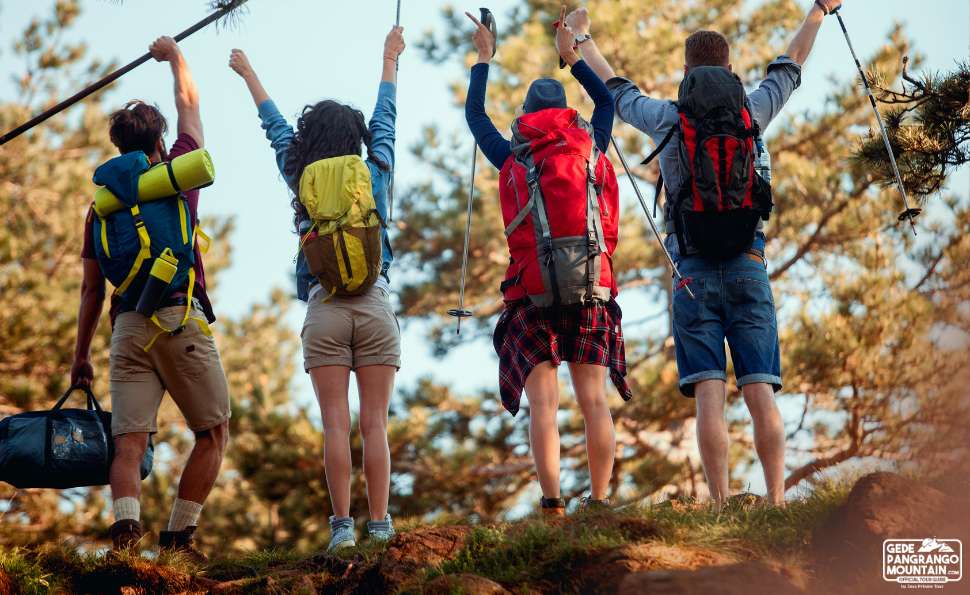
For trekkers, Mount Gede and Mount Pangrango are experienced as one continuous adventure. Popular routes allow hikers to summit Mount Gede, cross Kandang Badak, and continue to Pangrango in a single multi-day trek.
The transition feels natural. Forests, weather patterns, and trail conditions blend seamlessly. Local guides speak of “naik Gede Pangrango” rather than treating each mountain as a separate expedition.
Local Wisdom and Mountain Identity
Local communities have long viewed the massif as a unified presence—one powerful guardian of the landscape. Folklore, traditional beliefs, and even place names reflect this holistic understanding.
This perspective aligns closely with modern conservation science, reminding us that indigenous and local knowledge often recognizes natural systems long before formal classifications exist.
Why This Matters for Conservation and Visitors
Understanding why Mount Gede and Mount Pangrango are one system helps visitors appreciate the importance of responsible trekking and conservation. Damage in one area affects the whole massif—from wildlife corridors to water sources.
That’s why guided treks, permit systems, and conservation rules apply across the entire national park. Protecting the Gede–Pangrango system means protecting one of Java’s most important natural strongholds.
Explore the Gede Pangrango System with the Right Specialist
Exploring a complex mountain system like Gede–Pangrango requires deep local knowledge. This is where expertise truly matters. Java Private Tour is not a generalist, but a specialist, focusing on meaningful, well-guided experiences that respect the mountain’s natural and cultural integrity.
With experienced local guides, you don’t just climb a peak—you understand the system beneath your feet, the forest around you, and the stories carried by the wind through Kandang Badak.
Your Journey Into One of Java’s Greatest Mountain Systems
Mount Gede and Mount Pangrango are not simply neighbors. They are two summits of one powerful system—geologically, ecologically, hydrologically, and culturally intertwined. Seeing them as one transforms a hike into a deeper journey through time, earth, and life.
So, if you’re ready to explore the wonders of the Gede–Pangrango mountain system, head over to our REQUEST PAGE and let’s start planning your adventure. Or you can simply CLICK THIS LINK to chat with us on WhatsApp. With Java Private Tour, you’re not just getting a guide; you’re gaining a friend who will ensure your trip is nothing short of extraordinary. See you in Java!