
gedepangrangomountain.com – If you’ve ever trekked through Mount Gede Pangrango National Park, one thing surely caught your attention before the summit views did — moss, everywhere.
It blankets tree trunks, drapes over branches like green curtains, carpets rocks, and even softens the edges of the trail beneath your boots.
Many hikers call it Lumut Gede Pangrango, a nickname born from awe rather than science. And honestly, once you step into the misty forest zones of Mount Gede, it feels less like hiking and more like entering a living, breathing fairytale.
But why does moss grow so abundantly here? Let me walk you through the natural story behind this magical green world.
Understanding Moss in Mount Gede Pangrango
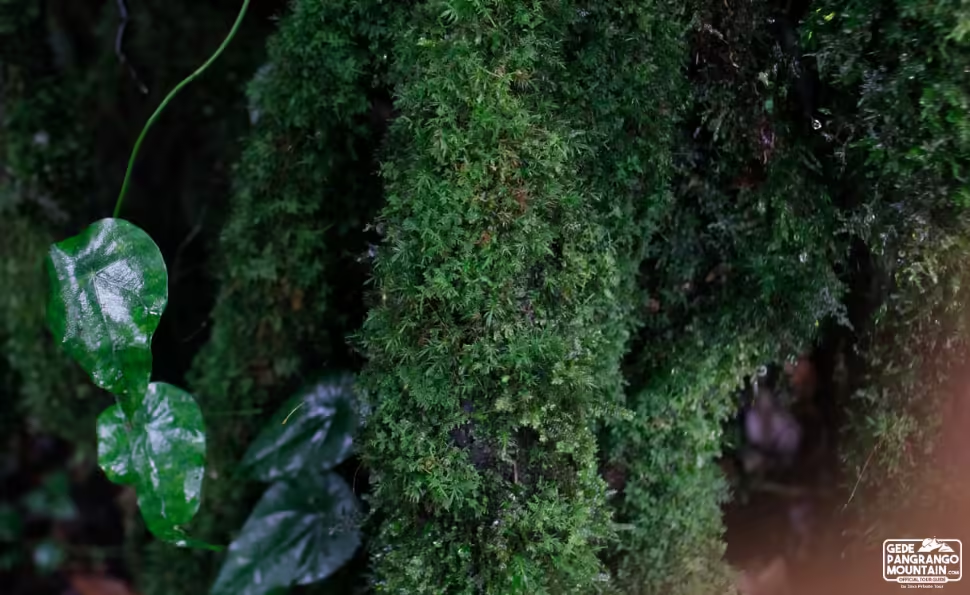
Mosses belong to a group of plants called bryophytes, which include mosses, liverworts, and hornworts. Unlike trees or flowering plants, mosses do not have true roots. They absorb water and nutrients directly from the air, rain, and surrounding surfaces.
This means one thing: they thrive only where nature provides constant moisture. And Mount Gede Pangrango does exactly that.
High Humidity Creates a Moss Paradise
One of the main reasons moss grows everywhere on Mount Gede Pangrango is consistently high humidity.
Humidity Levels in the Forest
- Average humidity often ranges between 80–90%
- In shaded valleys, cloud forests, and dense canopy areas, it can reach 75–100%
For moss, this is paradise. Because moss absorbs moisture directly from the air, the damp atmosphere allows it to survive, spread, and flourish without ever drying out.
Abundant Rainfall Feeds the Green Blanket
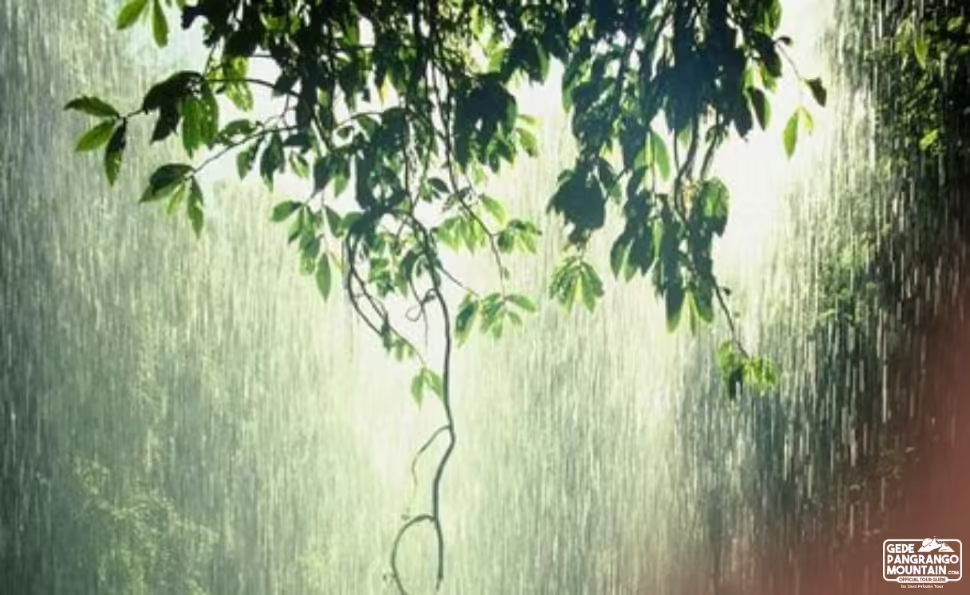
Mount Gede Pangrango experiences high annual rainfall, especially during the rainy season from October to May, with peak rainfall in December and January.
Why Rain Matters for Moss
- Keeps tree bark, soil, and rocks constantly damp
- Prevents moss from drying out
- Helps moss spores spread easily across surfaces
Unlike vascular plants that depend on roots drawing water from the soil, moss only needs frequent moisture. On Mount Gede, rain supplies that almost year-round.
Cool Mountain Temperatures Slow Evaporation
As elevation increases, temperatures on Mount Gede Pangrango gradually decrease. These cooler conditions play an important role in moss growth.
- Slows water evaporation
- Keeps surfaces moist for longer periods
- Reduces stress on moss tissues
In warmer lowland forests, moisture evaporates quickly. On Mount Gede, the cool air preserves dampness — allowing moss to stay lush, thick, and vibrant.
Cloud Forest Zones and Constant Mist
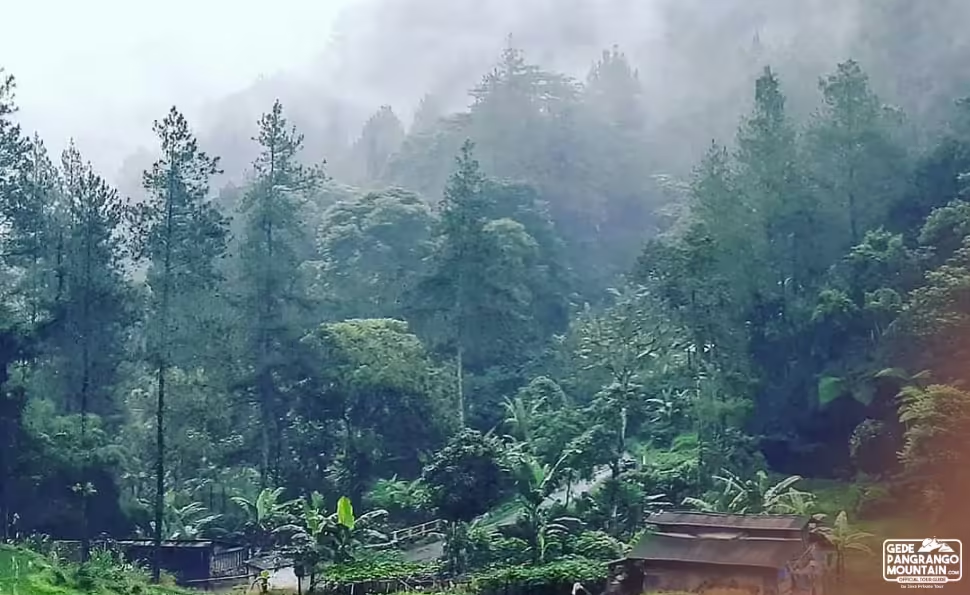
One of Mount Gede Pangrango’s most special features is its cloud forest ecosystem.
- Forests frequently wrapped in mist and fog
- Moisture comes not only from rain but also from clouds
- Trees, moss, and ferns constantly absorb water from the air
In these zones, moss doesn’t just grow — it dominates. Tree trunks become green towers, branches turn fuzzy, and hanging moss creates an otherworldly atmosphere that hikers often describe as mystical.
Volcanic Rock and Tree Bark as Ideal Substrates
Mount Gede Pangrango is a volcanic mountain, and its landscape provides perfect surfaces for moss to attach and spread.
- Rough tree bark gives spores a place to cling
- Irregular volcanic rocks trap moisture
- Minimal competition from larger plants on shaded surfaces
Lumut Gede Pangrango as a Symbol of Biodiversity
“Lumut Gede Pangrango” is not a scientific species name. It’s a term used by hikers and locals to describe the extraordinary abundance and diversity of moss throughout the national park.
- Over 120 species of mosses recorded
- Includes mosses, liverworts, and epiphytic mosses
- Thick growth of lumut resam covering trees and trails
The Ecological Role of Moss
Beyond its beauty, moss plays a critical ecological role on Mount Gede Pangrango.
- Maintains water balance
- Prevents soil erosion on steep slopes
- Creates microhabitats for insects and microorganisms
- Supports forest health alongside rare species like the Javan Gibbon and Javan Hawk-Eagle
The Fairytale Feeling on the Trail
Many hikers say trekking through Mount Gede feels like stepping into a fantasy world. Hanging moss sways gently in the mist, trails appear and disappear beneath green layers, and silence is broken only by dripping water and bird calls.
Some myths associate thick moss with forest spirits. In reality, the effect is caused by fog, branching trails, and dense vegetation — but the atmosphere truly feels magical.
Conservation Matters More Than Ever
The presence of moss signals a healthy ecosystem — but it’s also fragile. Climate change, careless trekking, and habitat disturbance can disrupt the delicate balance that allows moss to thrive.
Responsible hiking ensures that Lumut Gede Pangrango remains part of the mountain’s identity for generations to come.
Java Private Tour Is a Specialist
It’s important to know that Java Private Tour is not a generalist. We are specialists who focus deeply on specific destinations, ecosystems, and cultural landscapes — including Mount Gede Pangrango and its unique environments.
This specialist approach allows us to guide responsibly, educate meaningfully, and offer experiences that go beyond surface-level tourism.
Walk Gently Through the Mossy Kingdom
Understanding why moss grows everywhere on Mount Gede Pangrango helps you see the forest differently. Every soft green layer tells a story of rain, mist, cool air, and balance.
So, if you’re ready to explore the wonders of Mount Gede Pangrango’s mossy forests, head over to our REQUEST PAGE and let’s start planning your adventure. Or you can simply CLICK THIS LINK to chat with us on WhatsApp.
With Java Private Tour, you’re not just getting a guide; you’re gaining a friend who will ensure your trip is nothing short of extraordinary. See you in Java!